


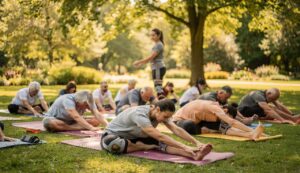
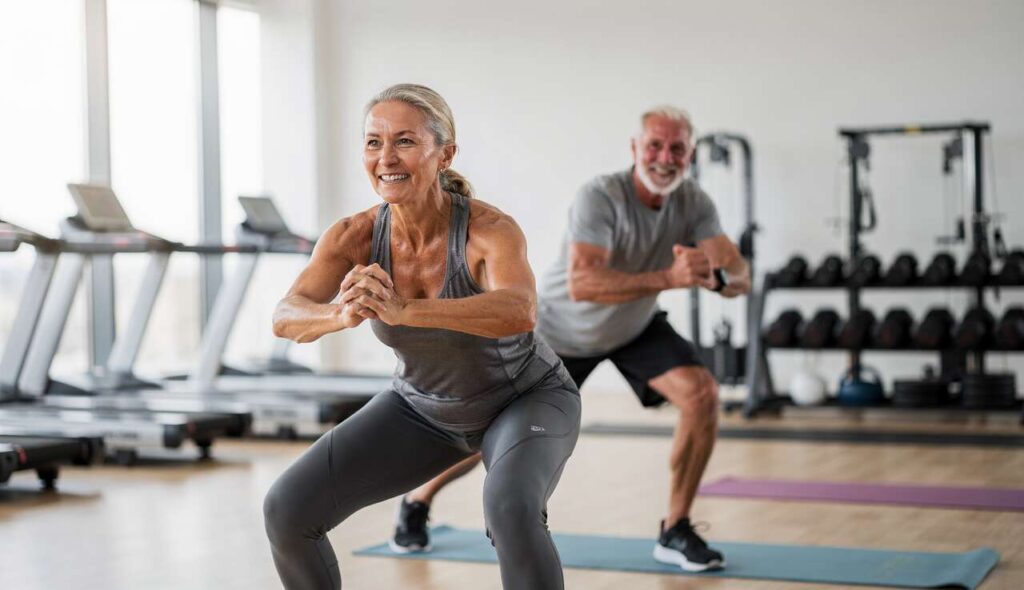
Maintaining physical fitness beyond the age of 55 presents unique challenges that require a thoughtful approach. Many people assume that lifting heavy weights is the only path to regaining muscle tone, yet this method can place unnecessary strain on ageing joints and connective tissues. The good news is that several gentle, low-impact exercises can deliver remarkable results without the risks associated with traditional weight training. These daily practices focus on functional movement, flexibility, and sustained muscle engagement, offering a safer and often more effective route to restoring strength and vitality.
The benefits of exercise after 55
Regular physical activity becomes increasingly vital as we age, serving as a cornerstone for maintaining independence and quality of life. After 55, the body undergoes natural changes that make exercise both more challenging and more necessary. Muscle mass naturally declines at a rate of approximately 3-5% per decade after the age of 30, a process known as sarcopenia. This loss accelerates after 55, making it essential to adopt a consistent exercise routine.
Physical advantages of staying active
Engaging in daily exercise offers numerous tangible benefits for those over 55. Bone density improves with regular movement, reducing the risk of osteoporosis and fractures. Cardiovascular health receives a significant boost, lowering blood pressure and improving circulation throughout the body. Balance and coordination also improve, which directly reduces the likelihood of falls—a major concern for older adults.
- Enhanced metabolic function and weight management
- Improved joint mobility and reduced arthritis symptoms
- Better sleep quality and energy levels throughout the day
- Increased cognitive function and memory retention
Mental and emotional wellbeing
The psychological benefits of exercise are equally compelling. Regular physical activity releases endorphins that combat depression and anxiety, conditions that can become more prevalent with age. Social engagement through group exercise classes provides valuable connections and reduces feelings of isolation. The sense of accomplishment from maintaining a fitness routine also bolsters self-esteem and creates a positive outlook on ageing.
Understanding these wide-ranging benefits sets the stage for examining why traditional approaches to muscle building may not always be the most suitable choice for this age group.
Why weight training is not always the best option
Conventional weight training programmes, whilst effective for younger populations, carry specific risks for individuals over 55. The emphasis on lifting progressively heavier loads can place excessive stress on joints, tendons, and ligaments that have naturally lost some elasticity over time. Injury rates increase significantly when proper form cannot be maintained or when the body is pushed beyond its current capabilities.
Joint stress and injury concerns
Heavy resistance training creates compression forces on the spine, knees, shoulders, and hips. For those with existing conditions such as arthritis or previous injuries, this can exacerbate pain and lead to chronic problems. Recovery time also lengthens with age, meaning that an injury sustained during weight training may sideline an individual for weeks or even months.
| Risk factor | Impact on over-55s |
|---|---|
| Joint compression | Increased arthritis symptoms and cartilage wear |
| Tendon strain | Higher likelihood of tears and inflammation |
| Balance challenges | Greater fall risk during complex lifts |
| Blood pressure spikes | Cardiovascular stress during heavy exertion |
The need for sustainable approaches
Sustainability is crucial when establishing a long-term fitness routine. Weight training often requires gym memberships, specialised equipment, and sometimes supervision from trainers. These barriers can make it difficult to maintain consistency. Furthermore, the all-or-nothing mentality that sometimes accompanies weight training can lead to discouragement if progress stalls or setbacks occur.
Recognising these limitations opens the door to exploring gentler alternatives that deliver comparable results without the associated risks.
Discovering low-impact exercises
Low-impact exercises provide an ideal solution for restoring muscle tone whilst minimising stress on the body. These activities maintain constant contact with the ground or provide external support, reducing jarring movements and protecting vulnerable joints. Effectiveness does not require high intensity; rather, it comes from consistent engagement and proper technique.
Walking with purpose
Brisk walking remains one of the most accessible and beneficial exercises for people over 55. By maintaining a steady pace and incorporating slight inclines, this activity engages the leg muscles, core, and cardiovascular system. Walking poles can further enhance the workout by involving the upper body and improving balance. A daily 30-minute walk can significantly improve muscle tone in the legs and glutes whilst being gentle enough to perform every day.
Swimming and water aerobics
Water-based activities offer exceptional resistance training without impact. The buoyancy of water supports body weight, reducing stress on joints by up to 90%, whilst the natural resistance strengthens muscles throughout the entire body. Swimming strokes engage the arms, shoulders, back, and core, whilst leg kicks tone the lower body. Water aerobics classes provide structured routines that combine cardiovascular work with resistance training in a supportive environment.
- Reduces joint pain whilst building strength
- Improves flexibility through full range of motion
- Enhances cardiovascular endurance
- Provides cooling effect that prevents overheating
These foundational low-impact activities create an excellent base, but specific targeted exercises can further enhance muscle restoration.
Gentle gym to restore muscle tone
Gentle gymnastics, often called calisthenics or bodyweight training, uses the body’s own weight as resistance. This approach builds functional strength that translates directly to daily activities whilst being infinitely adaptable to individual fitness levels. Progressive difficulty can be achieved by adjusting angles, repetitions, or duration rather than adding external weight.
Wall push-ups for upper body strength
Standing push-ups performed against a wall provide an excellent introduction to upper body strengthening. This exercise engages the chest, shoulders, triceps, and core without requiring floor work that may be difficult for some individuals. By adjusting the distance from the wall, resistance can be gradually increased as strength improves.
Chair squats for lower body power
Using a sturdy chair as a guide, sit-to-stand exercises build strength in the quadriceps, hamstrings, and glutes. This functional movement directly improves the ability to rise from chairs, use the toilet, and navigate stairs. Starting with a higher seat and progressing to lower positions allows for gradual strength development.
Modified planks for core stability
Core strength is essential for maintaining posture and preventing back pain. Modified planks performed on the knees or against an elevated surface engage the abdominal muscles, lower back, and shoulders. Holding these positions for 15-30 seconds builds endurance without requiring complex movements.
| Exercise | Primary muscles targeted | Daily repetitions |
|---|---|---|
| Wall push-ups | Chest, shoulders, triceps | 2 sets of 10-15 |
| Chair squats | Quadriceps, glutes, hamstrings | 2 sets of 10-12 |
| Modified planks | Core, shoulders, back | 3 holds of 20-30 seconds |
Whilst these exercises build strength, maintaining flexibility through dedicated stretching is equally important for overall muscle health.
The crucial role of daily stretching
Stretching often receives less attention than strength training, yet it plays a vital role in maintaining muscle tone and function. Flexible muscles are more efficient, less prone to injury, and better able to perform daily tasks. After 55, connective tissues naturally become less pliable, making regular stretching essential rather than optional.
Types of beneficial stretches
Static stretching involves holding a position for 15-30 seconds, allowing muscles to gradually lengthen. This method is ideal for cooling down after exercise or as a standalone practice. Dynamic stretching, which involves controlled movements through a full range of motion, serves as an excellent warm-up before more vigorous activity.
- Hamstring stretches improve leg flexibility and reduce back strain
- Shoulder rolls and arm circles maintain upper body mobility
- Hip flexor stretches counteract the effects of prolonged sitting
- Calf stretches support ankle stability and walking efficiency
Creating a daily stretching routine
Consistency matters more than duration when establishing a stretching practice. A focused 10-minute session each morning can dramatically improve flexibility over time. Breathing deeply during stretches enhances relaxation and allows muscles to release tension more effectively. Never force a stretch to the point of pain; discomfort should be mild and muscles should feel pleasantly extended.
Building upon the foundation of stretching, certain Eastern practices offer comprehensive approaches to flexibility and strength combined.
The benefits of Tai Chi and yoga for seniors
Traditional practices from Eastern cultures provide holistic approaches to fitness that address strength, flexibility, balance, and mental clarity simultaneously. Tai Chi and yoga have been adapted specifically for older adults, making them accessible whilst retaining their profound benefits.
Tai Chi for balance and coordination
This ancient Chinese martial art involves slow, flowing movements that improve balance and proprioception—the body’s awareness of its position in space. Weight shifting between legs strengthens the lower body whilst the continuous motion maintains cardiovascular engagement. Research has shown that regular Tai Chi practice significantly reduces fall risk in older adults.
Yoga for flexibility and strength
Gentle yoga styles such as Hatha or chair yoga provide modified poses that build strength whilst improving flexibility. The emphasis on breath work reduces stress and enhances oxygen delivery to muscles. Isometric holds in various poses create muscle engagement without dynamic movement, making yoga particularly suitable for those with joint concerns.
- Improves posture and spinal alignment
- Enhances mind-body connection and body awareness
- Reduces chronic pain through gentle movement
- Promotes relaxation and better sleep quality
Accessibility and community aspects
Both Tai Chi and yoga classes designed for seniors are widely available in community centres, leisure facilities, and online platforms. The group setting provides social interaction and motivation, whilst instructors can offer modifications for individual limitations. Many practitioners report that these activities become enjoyable rituals rather than obligatory exercise sessions.
Restoring muscle tone after 55 does not require punishing gym sessions or heavy weights. The five approaches outlined—low-impact cardio, gentle gymnastics, daily stretching, Tai Chi, and yoga—offer safer and often more effective alternatives to traditional weight training. By focusing on consistency, proper form, and gradual progression, individuals can rebuild strength, improve flexibility, and enhance overall quality of life. The key lies in selecting activities that feel sustainable and enjoyable, ensuring that fitness becomes a permanent and rewarding part of daily life rather than a temporary endeavour.