

Falls represent one of the most significant health concerns for older adults, with research showing that one in three people over 65 experiences a fall each year. While many factors contribute to falls, poor balance and reduced core strength play a crucial role. Pilates, a low-impact exercise method focusing on controlled movements and core stability, has emerged as an effective approach to reducing fall risk. Speaking with a certified Pilates instructor revealed a practical 10-minute standing routine specifically designed to enhance stability and prevent falls, offering an accessible solution for those seeking to maintain their independence and confidence in daily activities.
Introduction to Pilates for fall prevention
Understanding the Pilates method
Pilates is a mind-body exercise system developed in the early 20th century that emphasises controlled movements, proper breathing, and core engagement. The practice focuses on building strength from the inside out, targeting deep stabilising muscles that support the spine and pelvis. Unlike high-impact exercises, Pilates movements are gentle yet effective, making them particularly suitable for individuals concerned about fall prevention.
How Pilates addresses fall risk factors
The connection between Pilates and fall prevention lies in the method’s comprehensive approach to physical fitness. Pilates exercises target several key areas that directly influence stability:
- Core strength development for better postural control
- Improved proprioception and body awareness
- Enhanced muscle coordination and balance
- Increased flexibility in joints and muscles
- Strengthened ankle and hip stabilisers
This multi-faceted approach makes Pilates particularly effective for addressing the underlying physical weaknesses that contribute to falls. Understanding why stability matters provides further insight into the method’s effectiveness.
Why stability is essential for preventing falls
The role of balance in daily activities
Stability encompasses more than simply standing on one leg. It involves the complex interplay between muscles, joints, and the nervous system to maintain equilibrium during movement. Every daily activity, from walking to reaching for objects, requires adequate stability. When balance systems deteriorate, even simple tasks become hazardous.
Physical factors affecting stability
Several physiological elements contribute to overall stability and balance. Age-related changes often compromise these systems:
| Factor | Impact on stability | Pilates benefit |
|---|---|---|
| Muscle strength | Weak muscles cannot support body weight effectively | Builds functional strength |
| Joint flexibility | Stiff joints limit range of motion | Increases mobility safely |
| Proprioception | Poor body awareness leads to missteps | Enhances spatial awareness |
| Reaction time | Slow responses prevent quick corrections | Improves neuromuscular coordination |
Consequences of poor stability
The impact of inadequate stability extends beyond the physical risk of falling. Fear of falling often leads to reduced activity levels, creating a vicious cycle of declining fitness and increasing vulnerability. Loss of confidence can result in social isolation and decreased quality of life. Addressing stability through targeted exercise offers both physical and psychological benefits.
The specific advantages of a structured Pilates routine become apparent when examining its practical applications.
The benefits of the 10-minute Pilates routine
Time efficiency and accessibility
A 10-minute standing routine offers remarkable advantages for those with busy schedules or limited mobility. This brief duration makes the practice sustainable and eliminates common barriers to exercise adherence. The standing format requires no special equipment or floor work, making it accessible for individuals who struggle with getting up and down from the ground.
Specific improvements from regular practice
Consistent engagement with this short routine delivers measurable improvements in multiple areas. Practitioners typically notice enhanced postural alignment within weeks, as the exercises strengthen muscles responsible for maintaining upright positioning. The routine also develops the small stabilising muscles around ankles and hips, which are crucial for preventing stumbles.
Long-term health outcomes
Research demonstrates that regular balance training significantly reduces fall incidence. A dedicated 10-minute daily practice provides sufficient stimulus to maintain and improve stability without causing excessive fatigue. The cumulative effect of this modest investment yields substantial returns in terms of independence and injury prevention.
Understanding the specific exercises within this routine clarifies how these benefits are achieved.
Description of the standing Pilates routine
Warm-up movements
The routine begins with gentle mobilisation exercises to prepare the body. Standing tall with feet hip-width apart, practitioners perform controlled breathing whilst engaging the core. Ankle circles and gentle knee bends increase blood flow to the lower extremities, preparing joints and muscles for more challenging movements.
Core stability exercises
The main sequence includes exercises specifically targeting balance and strength:
- Single-leg stands : holding balance on one leg for 30 seconds each side
- Heel raises : rising onto toes whilst maintaining alignment
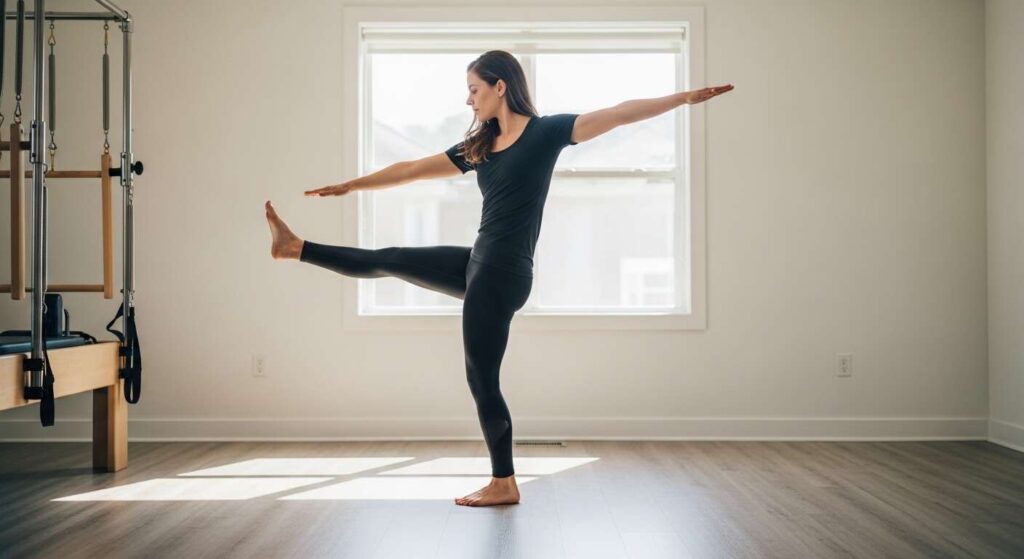
- Standing leg lifts : controlled movements in multiple directions
- Tandem stance : positioning one foot directly in front of the other
- Weight shifts : transferring body weight from side to side with control
Progression and modifications
The instructor emphasised that each exercise can be adapted to individual ability levels. Beginners may perform movements near a wall or sturdy chair for support, gradually reducing assistance as strength improves. Advanced practitioners can increase difficulty by closing their eyes or performing movements on unstable surfaces.
Making this routine a regular habit requires practical strategies for integration into daily life.
Tips for incorporating Pilates into your daily life
Creating a consistent practice schedule
Establishing a regular time for the routine increases adherence significantly. Morning practice energises the body for the day ahead, whilst evening sessions can relieve accumulated tension. Linking the routine to existing habits, such as performing it after breakfast or before dinner, helps cement the practice into daily rhythms.
Environmental considerations
Creating an appropriate space for practice enhances safety and enjoyment. The area should provide adequate room for movement with a non-slip surface. Good lighting prevents missteps, and having a stable support nearby offers security for those building confidence. Comfortable clothing that allows free movement is essential.
Tracking progress and staying motivated
Maintaining a simple log of practice sessions helps monitor consistency and improvements. Recording how long you can hold balance positions or noting when exercises feel easier provides tangible evidence of progress. Celebrating small achievements maintains motivation throughout the journey.
Professional perspectives validate the effectiveness of this approach to fall prevention.
Expert opinions on the effectiveness of Pilates for stability
Research supporting Pilates for balance
Multiple studies have examined Pilates as an intervention for improving balance in older adults. Clinical trials demonstrate that regular Pilates practice produces significant improvements in static and dynamic balance measures. Participants in these studies also report increased confidence in their ability to perform daily activities without fear of falling.
Professional recommendations
Physiotherapists and occupational therapists increasingly recommend Pilates as part of comprehensive fall prevention programmes. The method’s emphasis on controlled movement and body awareness complements other interventions. Healthcare professionals appreciate that Pilates can be safely practised at home with minimal instruction once proper form is established.
Real-world success stories
The instructor shared numerous examples of clients who transformed their stability through consistent practice. One individual regained the confidence to navigate stairs independently after eight weeks of daily practice. Another reported no longer experiencing the dizzy spells that had previously caused near-falls. These personal testimonies underscore the practical value of this accessible exercise approach.
Fall prevention through improved stability represents an achievable goal for individuals willing to invest just 10 minutes daily in their physical wellbeing. This standing Pilates routine offers a practical, evidence-based method for enhancing balance, strengthening stabilising muscles, and building confidence in movement. The exercises require no special equipment and can be adapted to various fitness levels, making them accessible to a wide population. Regular practice delivers measurable improvements in the physical factors that contribute to falls whilst simultaneously addressing the psychological fear that often limits activity. By incorporating this brief routine into daily life and maintaining consistency, individuals can significantly reduce their fall risk and preserve their independence for years to come.