


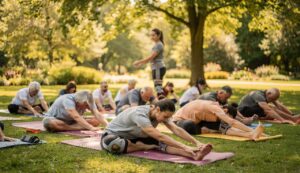

Staying physically strong and active beyond the age of 70 is not only possible but increasingly common among those who commit to consistent fitness practices. Many individuals discover that their later years can be a time of remarkable physical capability, often surpassing their own expectations. The key lies in understanding how the ageing body responds to exercise, nutrition, and recovery, then implementing strategies that work with these natural processes rather than against them. Through a combination of targeted strength training, proper nutrition, and smart recovery techniques, maintaining and even building strength in your seventies becomes an achievable goal rather than a distant dream.
Introduction to muscle strengthening after 70
The process of muscle strengthening after 70 requires a fundamentally different approach compared to earlier decades. Sarcopenia, the natural loss of muscle mass that accelerates with age, affects most adults but can be significantly slowed through appropriate resistance training. Research demonstrates that muscle fibres retain their capacity to grow and strengthen well into advanced age, provided they receive adequate stimulus and recovery time.
Understanding age-related changes
The body undergoes several physiological changes that affect fitness capacity:
- Reduced protein synthesis rates requiring higher protein intake
- Decreased bone density necessitating weight-bearing exercises
- Slower recovery times between training sessions
- Reduced joint flexibility and mobility
- Changes in hormone levels affecting muscle maintenance
Recognising these changes allows for strategic programme design that accommodates biological realities whilst still challenging the body sufficiently to promote adaptation. The goal is not to train like a 30-year-old but to optimise training for a 70-year-old physiology.
Understanding these foundational principles naturally leads to examining the broader advantages that consistent physical activity provides.
Benefits of regular physical activity
The advantages of maintaining regular physical activity extend far beyond simple muscle maintenance. Systematic exercise creates a cascade of positive effects throughout multiple body systems, contributing to overall health and quality of life.
Physical health improvements
| System | Benefit | Impact |
|---|---|---|
| Cardiovascular | Improved heart efficiency | 30% reduction in heart disease risk |
| Metabolic | Better glucose regulation | Reduced diabetes risk by 40% |
| Skeletal | Increased bone density | 50% lower fracture risk |
| Cognitive | Enhanced brain function | Delayed cognitive decline |
Mental and emotional wellbeing
Beyond physical metrics, regular exercise profoundly influences mental health. Studies consistently show that active individuals over 70 experience lower rates of depression and anxiety whilst reporting higher life satisfaction scores. The discipline of maintaining a fitness routine provides structure, purpose, and measurable progress that contributes to psychological resilience.
These wide-ranging benefits depend significantly on proper nutritional support to fuel performance and recovery.
Diet adapted for better performance
Nutrition becomes increasingly critical after 70, as the body’s ability to process and utilise nutrients changes. An optimised diet strategy supports training efforts and accelerates recovery.
Protein requirements and timing
Older adults require approximately 1.2 to 1.6 grams of protein per kilogram of body weight daily, significantly higher than standard recommendations. This increased requirement compensates for reduced protein synthesis efficiency. Distributing protein intake across multiple meals, with particular emphasis on post-exercise consumption, maximises muscle protein synthesis.
Essential nutrients for strength
- Vitamin D: crucial for muscle function and bone health, often deficient in older populations
- Calcium: supports bone density alongside weight-bearing exercise
- Omega-3 fatty acids: reduce inflammation and support joint health
- B vitamins: essential for energy metabolism and nervous system function
- Magnesium: aids muscle contraction and recovery processes
Hydration strategies
Adequate hydration becomes more challenging with age as thirst sensation diminishes. Consuming at least 2 litres of water daily, with additional intake around training sessions, maintains performance and supports recovery. Dehydration significantly impairs strength output and increases injury risk.
With proper nutritional foundations established, attention turns to the specific exercises that deliver optimal results.
Weight training exercises to prioritise
Selecting appropriate exercises requires balancing effectiveness with safety considerations. Compound movements that engage multiple muscle groups simultaneously provide the greatest return on training investment.
Fundamental strength exercises
The following movements form the cornerstone of an effective programme:
- Squats or leg press variations: develop lower body strength essential for mobility
- Chest press movements: maintain upper body pushing strength
- Rowing exercises: strengthen the back and improve posture
- Overhead pressing: develops shoulder stability and strength
- Deadlift variations: builds posterior chain strength and functional capacity
Training frequency and volume
| Experience Level | Weekly Sessions | Sets per Exercise | Repetition Range |
|---|---|---|---|
| Beginner | 2-3 | 2-3 | 10-15 |
| Intermediate | 3-4 | 3-4 | 8-12 |
| Advanced | 4-5 | 4-5 | 6-12 |
Progressive overload remains essential but should advance conservatively. Increasing weight by small increments every few weeks, or adding repetitions before increasing load, provides sustainable progress whilst minimising injury risk.
However, training intensity must be carefully balanced with adequate recovery to prevent overtraining and injury.
Importance of recovery and flexibility
Recovery becomes the limiting factor in training progress after 70. Insufficient recovery undermines training adaptations and increases injury susceptibility, making rest periods as important as the training itself.
Active recovery strategies
Incorporating active recovery days between intense training sessions promotes blood flow and nutrient delivery without imposing additional training stress. Light walking, swimming, or cycling at conversational pace facilitates recovery whilst maintaining movement patterns.
Flexibility and mobility work
Dedicating time to flexibility training yields substantial benefits:
- Improved range of motion in exercises allowing better technique
- Reduced injury risk through enhanced joint mobility
- Better posture and reduced chronic pain
- Enhanced balance and coordination
Incorporating 15-20 minutes of stretching or yoga three times weekly maintains functional mobility. Focus particularly on hip flexors, hamstrings, shoulders, and thoracic spine, areas that commonly develop restrictions.
Sleep and stress management
Quality sleep of 7-8 hours nightly provides the foundation for recovery. During deep sleep, growth hormone release peaks, facilitating muscle repair and adaptation. Managing stress through meditation, social connection, or hobbies prevents cortisol elevation that interferes with recovery processes.
Even with optimal programming and recovery, long-term success depends on maintaining consistent effort over months and years.
Motivation and maintaining regularity
Sustaining a fitness programme requires more than initial enthusiasm. Building systems and habits that support regular training proves more reliable than depending solely on motivation.
Establishing sustainable routines
Scheduling training sessions at consistent times creates automatic behaviour patterns. Morning sessions often prove most reliable, as fewer competing demands arise early in the day. Treating exercise appointments with the same importance as medical appointments reinforces commitment.
Tracking progress effectively
Maintaining a training log provides tangible evidence of improvement, particularly valuable during periods when progress feels slow. Recording weights, repetitions, and subjective difficulty creates a motivational feedback loop by demonstrating capabilities that exceed previous limitations.
Social support structures
Training with partners or joining group classes introduces accountability whilst making sessions more enjoyable. The social dimension of fitness becomes increasingly important with age, combating isolation whilst reinforcing exercise habits.
Remaining strong and capable throughout your seventies results from consistent application of evidence-based principles across training, nutrition, and recovery. The combination of progressive resistance training, adequate protein intake, strategic recovery practices, and sustainable habits creates a framework for maintaining and building strength regardless of age. Success requires patience and persistence, but the rewards of sustained independence, vitality, and physical capability make the investment worthwhile. Those who commit to these practices often find themselves stronger and more capable than they imagined possible, proving that age need not dictate physical decline.