



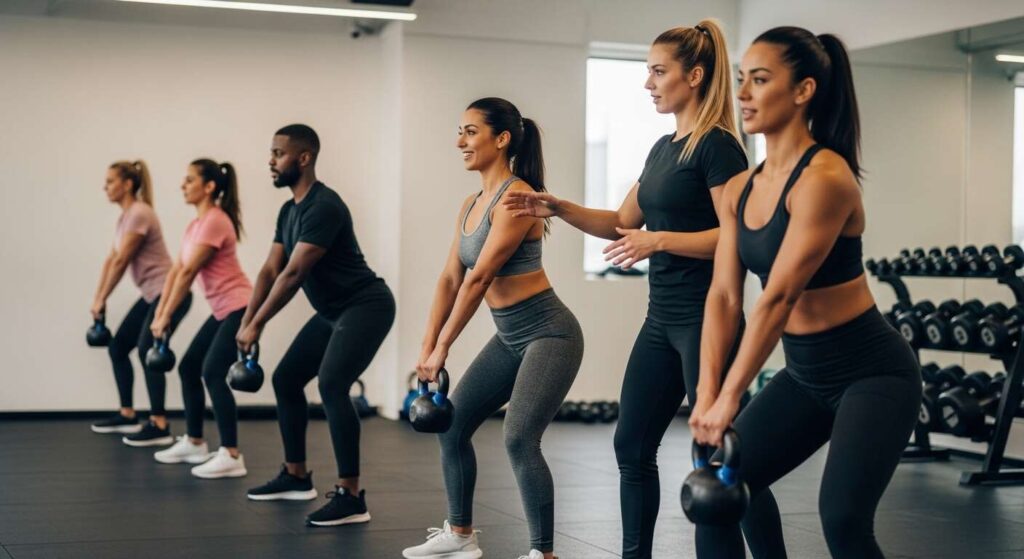
Movement quality matters more than the weight you lift or the repetitions you complete. A kettlebell workout designed by a kinesiologist and movement specialist offers a structured approach to mastering fundamental movement patterns whilst building strength, stability and coordination. This six-move programme caters to beginners and experienced athletes alike, focusing on teaching your body to move efficiently through space. The beauty of kettlebell training lies in its ability to challenge multiple muscle groups simultaneously whilst improving functional fitness that translates directly to everyday activities.
Introduction to kettlebell: a versatile tool for all levels
The kettlebell stands out as one of the most adaptable pieces of fitness equipment available. Its unique shape, with a handle attached to a weighted sphere, allows for dynamic movements that engage the entire body. Unlike traditional dumbbells, kettlebells shift the centre of mass away from the grip, creating an unstable load that demands greater control and coordination.
Why kinesiologists recommend kettlebell training
Kinesiologists study human movement mechanics, making them uniquely qualified to design exercise programmes that enhance movement quality. They recognise several key advantages of kettlebell training:
- Improved proprioception and body awareness
- Enhanced coordination between muscle groups
- Development of functional strength patterns
- Increased joint stability and mobility
- Efficient calorie expenditure through compound movements
The versatility of kettlebells means that a single piece of equipment can facilitate hundreds of exercises, making it ideal for home workouts or minimalist training spaces. Understanding these foundational benefits naturally leads to exploring how kettlebell training specifically improves movement patterns and postural alignment.
The benefits of kettlebell for movement and posture
Poor movement patterns and postural dysfunction plague modern society, largely due to sedentary lifestyles and repetitive movements. Kettlebell training addresses these issues by reinforcing proper biomechanics through loaded movement patterns.
Postural improvements through kettlebell work
Regular kettlebell practice strengthens the posterior chain, the network of muscles running along the back of your body. This includes the glutes, hamstrings, back extensors and rear deltoids. Strengthening these often-neglected muscles counteracts the forward-slouching posture common among desk workers.
| Movement pattern | Primary benefit | Postural impact |
|---|---|---|
| Swings | Hip hinge mechanics | Strengthens lower back and glutes |
| Turkish get-ups | Shoulder stability | Improves thoracic mobility |
| Goblet squats | Ankle and hip mobility | Reinforces upright torso position |
Movement quality over quantity
The kinesiological approach emphasises perfect form over heavy loads. Each repetition becomes an opportunity to refine movement patterns, creating neuromuscular pathways that improve coordination and efficiency. This focus on quality ensures that your body learns to move correctly under load, a skill that transfers to daily activities like lifting groceries or playing with children. These principles form the foundation for the six essential exercises that comprise this comprehensive workout.
Developing stability and strength with six key exercises
This carefully curated selection of six kettlebell movements addresses all fundamental human movement patterns. Each exercise builds upon the previous one, creating a progressive system that develops total-body competence.
The six essential movements
The programme includes:
- Kettlebell deadlift: teaches the hip hinge pattern whilst building posterior chain strength
- Goblet squat: develops lower body strength and reinforces proper squat mechanics
- Kettlebell swing: creates explosive hip power and cardiovascular conditioning
- Single-arm row: strengthens the back and improves pulling mechanics
- Overhead press: builds shoulder stability and vertical pushing strength
- Turkish get-up: integrates all movement patterns into one complex, full-body exercise
Progressive loading strategies
Begin with a light kettlebell that allows you to complete all repetitions with perfect form. As a kinesiologist would recommend, mastery of movement patterns takes precedence over increasing weight. Only progress to heavier loads once you can execute each exercise flawlessly for the prescribed repetitions. This methodical approach ensures sustainable progress whilst minimising injury risk. Applying these exercises effectively requires understanding how to structure your training sessions for optimal results.
Tips for optimising your session with a movement specialist
A movement specialist brings expertise in biomechanics that transforms a simple workout into a therapeutic movement practice. Their insights help you extract maximum benefit from each session.
Session structure and frequency
Perform this workout two to three times weekly, allowing at least one rest day between sessions. Each session should follow this structure:
- Five-minute dynamic warm-up focusing on hip and shoulder mobility
- Movement practice with lighter kettlebell (50% of working weight)
- Main workout performing 3-4 sets of 8-12 repetitions per exercise
- Cool-down including static stretching and breathing exercises
Breathing and bracing techniques
Proper breathing mechanics enhance stability and power output. Inhale during the eccentric (lowering) phase and exhale forcefully during the concentric (lifting) phase. For exercises like swings and get-ups, use diaphragmatic breathing to create intra-abdominal pressure, effectively bracing your core. These techniques become second nature with practice, seamlessly integrating into your daily movement habits.
Hints for incorporating kettlebell into your daily routine
Consistency trumps intensity when building lasting movement competence. Strategic integration of kettlebell work into your existing schedule ensures long-term adherence.
Creating sustainable habits
Start by scheduling sessions at the same time each day, treating them as non-negotiable appointments. Morning sessions often work best, as they establish a positive tone for the day and eliminate the risk of evening fatigue derailing your plans. Keep your kettlebell visible in your living space as a constant reminder.
Microworkouts throughout the day
Beyond structured sessions, incorporate movement snacks throughout your day. Perform five goblet squats before lunch, ten swings during a work break, or practice get-ups whilst watching television. These brief practices reinforce movement patterns and accumulate significant training volume over time. Understanding how to train safely ensures these habits contribute to long-term health rather than creating new problems.
Preventing injuries and maximising results through kinesiology
A kinesiological perspective prioritises injury prevention through proper movement mechanics and intelligent programme design. This approach recognises that sustainable progress requires respecting your body’s limitations whilst progressively expanding its capabilities.
Common mistakes to avoid
Several errors frequently compromise kettlebell training effectiveness:
- Rounding the lower back during deadlifts and swings
- Using momentum instead of muscular control
- Progressing weight too quickly before mastering technique
- Neglecting unilateral exercises that address asymmetries
- Training through pain rather than working around limitations
Recovery and adaptation strategies
Your body adapts and strengthens during recovery periods, not during the workout itself. Prioritise sleep quality, adequate protein intake, and active recovery activities like walking or gentle yoga. Monitor your performance across sessions; consistent improvement indicates appropriate training load, whilst stagnation or regression suggests inadequate recovery. Consider filming your exercises periodically to assess form objectively, as movement quality often deteriorates before you consciously notice.
This six-move kettlebell programme offers a comprehensive approach to movement development grounded in kinesiological principles. By prioritising quality over quantity, respecting progressive overload, and maintaining consistency, you develop movement competence that enhances every aspect of physical function. The versatility of kettlebell training means these six exercises provide sufficient stimulus for continued adaptation regardless of your current fitness level, making this programme a sustainable long-term solution for improving how you move through life.