



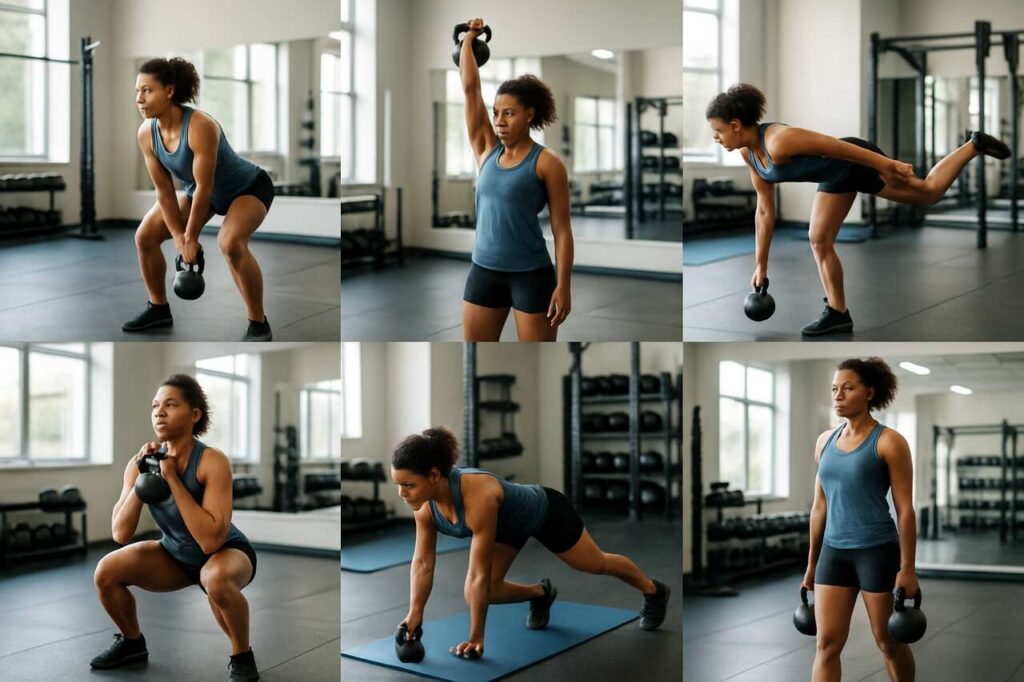
Mastering proper movement patterns stands as one of the most overlooked aspects of fitness training. While many individuals rush towards heavier weights and complex routines, the foundation of quality movement often remains neglected. A kinesiologist and movement specialist recently shared a comprehensive six-move kettlebell routine designed to teach fundamental movement principles regardless of experience level. This approach prioritises movement quality over intensity, offering a structured pathway for developing strength, coordination, and body awareness through carefully selected exercises that challenge both beginners and seasoned athletes.
Introduction to kettlebell: a versatile tool for all levels
Understanding the unique design of kettlebells
Kettlebells possess a distinctive construction that sets them apart from conventional training equipment. The offset centre of mass creates an unstable load that demands greater muscular control throughout each movement. This characteristic forces the body to engage stabilising muscles continuously, developing functional strength that translates directly to everyday activities and athletic performance.
The handle design allows for both single-hand and double-hand grips, enabling a wide variety of exercises that target different muscle groups and movement patterns. This versatility makes kettlebells particularly valuable for individuals seeking comprehensive fitness development without requiring extensive equipment collections.
Why kinesiologists recommend kettlebell training
Movement specialists advocate for kettlebell workouts based on several scientifically supported benefits:
- enhanced proprioception through dynamic weight distribution
- improved coordination between opposing muscle groups
- development of natural, athletic movement patterns
- increased joint stability across multiple planes of motion
- efficient calorie expenditure through compound exercises
The ballistic nature of many kettlebell movements encourages explosive power development whilst maintaining control, a combination rarely achieved with static training methods. This dynamic quality prepares the body for real-world physical demands more effectively than isolated exercises.
Beyond physical adaptations, kettlebell training develops mental focus and body awareness, as each repetition requires conscious attention to form and positioning. These cognitive benefits complement the physical improvements, creating a holistic training experience.
The benefits of kettlebell on movement and posture
Developing functional strength patterns
Kettlebell exercises emphasise multi-joint movements that mirror natural human biomechanics. Unlike machines that isolate specific muscles, kettlebell work integrates entire kinetic chains, teaching the body to function as a coordinated unit. This approach builds strength that applies directly to lifting objects, carrying groceries, or performing physical tasks without injury risk.
The hip-hinge pattern featured prominently in kettlebell training proves particularly valuable for spinal health. Learning to generate power from the hips whilst maintaining a neutral spine protects the lower back and establishes proper lifting mechanics that prevent chronic pain and acute injuries.
Postural improvements through consistent practice
Regular kettlebell training addresses common postural deficiencies caused by sedentary lifestyles. The exercises strengthen posterior chain muscles including the glutes, hamstrings, and upper back, counteracting the forward-rounded posture associated with prolonged sitting. This muscular balance restores natural spinal alignment and reduces strain on overworked structures.
| postural benefit | affected area | primary kettlebell movement |
|---|---|---|
| shoulder blade retraction | upper back | rows and deadlifts |
| hip extension strength | glutes and hamstrings | swings and squats |
| core stability | abdominals and obliques | Turkish press and farmer’s walk |
| thoracic mobility | mid-back | windmills and Turkish press |
These postural adaptations extend beyond aesthetic improvements, directly enhancing breathing efficiency, reducing headache frequency, and improving overall physical comfort during daily activities. The compound nature of kettlebell movements ensures balanced development across all postural muscle groups.
Strengthening stability and force with six key exercises
The kettlebell deadlift: foundation of hip power
The deadlift establishes the fundamental hip-hinge pattern essential for safe lifting. Standing with the kettlebell positioned between the feet, practitioners push the hips backwards whilst maintaining a neutral spine. Grasping the handle with both hands, the shoulder blades retract to engage the upper back before driving through the hips to return to standing position. This movement teaches proper spinal mechanics whilst developing posterior chain strength.
The kettlebell squat: building lower body strength
Holding the kettlebell at chest height with extended arms, the squat movement descends until the thighs reach parallel with the ground. This goblet position naturally encourages an upright torso and proper depth, addressing common squat deficiencies. The anterior load challenges core stability whilst developing quadriceps, glutes, and hip mobility simultaneously.
The farmer’s walk: functional carrying strength
Grasping a kettlebell in each hand, this exercise involves walking a predetermined distance whilst maintaining perfect posture. The unilateral loading challenges core stability and grip strength, developing the carrying capacity essential for daily tasks. Proper execution requires shoulder blade depression, neutral spine alignment, and controlled breathing throughout the movement.
The kettlebell swing: explosive hip extension
Beginning with the kettlebell on the ground, the swing drives the weight forward through explosive hip extension. The arms serve merely as connections between the hips and the kettlebell, with all power generated from the posterior chain. This ballistic movement develops cardiovascular conditioning alongside muscular power, making it exceptionally time-efficient.
The Turkish press: total body coordination
Lying supine with the kettlebell pressed overhead, this complex movement requires standing whilst maintaining the weight in a fixed overhead position. Each phase demands precise coordination between multiple muscle groups, developing shoulder stability, core strength, and body awareness. The deliberate pace encourages mindful movement execution.
The one-arm row: upper back development
Supporting the body with one knee and the opposite hand on a bench, the rowing motion pulls the kettlebell towards the hip whilst keeping the elbow close to the body. This exercise strengthens the latissimus dorsi and middle trapezius muscles, essential for postural health and pulling strength. The unilateral nature addresses strength imbalances between sides.
Performing these six movements in three complete sets creates a comprehensive training session that addresses all fundamental movement patterns. The routine structure allows for progressive overload whilst maintaining focus on movement quality.
Tips for optimising your session with a movement specialist
Selecting appropriate kettlebell weights
Choosing the correct resistance proves crucial for effective training. A dual-weight approach works best: heavier kettlebells for deadlifts, squats, and farmer’s walks where larger muscle groups generate force, and lighter weights for swings, Turkish presses, and rows that require greater control and coordination. Beginning with conservative weights allows proper technique development before progressing to challenging loads.
Prioritising form over intensity
Movement specialists consistently emphasise that quality execution supersedes heavy weights or high repetition counts. Each repetition should demonstrate controlled movement through the full range of motion, with particular attention to spinal positioning and joint alignment. Recording training sessions enables objective assessment of technique, revealing subtle compensations that might otherwise go unnoticed.
Implementing progressive overload principles
Systematic progression ensures continued adaptation without overwhelming the body’s recovery capacity. Strategies include:
- gradually increasing repetitions within each set
- reducing rest periods between exercises
- advancing to heavier kettlebells once form remains perfect
- adding additional sets to increase training volume
- incorporating tempo variations to increase time under tension
These progression methods maintain training stimulus whilst preserving movement quality, the cornerstone of long-term development and injury prevention.
Tricks for integrating kettlebell into your daily routine
Creating sustainable training schedules
Consistency determines training success more than individual session intensity. Scheduling three sessions weekly allows adequate recovery whilst maintaining training frequency. Non-consecutive days prevent accumulated fatigue, enabling each workout to occur with fresh energy and maintained focus on proper technique.
Combining kettlebell work with other activities
Kettlebell training complements various fitness pursuits rather than replacing them entirely. Runners benefit from the posterior chain strengthening that improves stride power and prevents common overuse injuries. Yoga practitioners discover enhanced stability in challenging poses through improved strength. Team sport athletes develop explosive power applicable to their specific movements.
Minimal equipment, maximum flexibility
The compact nature of kettlebells enables training in diverse locations. Home workouts become feasible without dedicated gym space, whilst travel fitness remains accessible with portable equipment. This location independence removes common barriers to consistent training, supporting long-term adherence to fitness goals.
Understanding how to incorporate kettlebell training within existing schedules ensures sustainable practice. The time-efficient nature of compound movements delivers comprehensive benefits within manageable session durations, typically requiring only thirty to forty-five minutes including warm-up and cool-down periods.
Preventing injuries and maximising results through kinesiology
Understanding movement compensations
Kinesiological assessment identifies compensatory patterns where the body substitutes intended movements with alternative strategies. These compensations often develop from previous injuries, muscular imbalances, or poor movement education. Recognising these patterns allows targeted correction before they cause pain or limit performance.
Implementing proper warm-up protocols
Adequate preparation significantly reduces injury risk whilst improving performance quality. Effective warm-ups include:
- general cardiovascular activity to increase tissue temperature
- dynamic stretching targeting major muscle groups
- movement-specific preparation using lighter kettlebells
- activation exercises for commonly underactive muscles
This systematic approach prepares the nervous system alongside the musculoskeletal system, optimising coordination and force production during the working sets.
Recognising when to modify or rest
Distinguishing between productive discomfort and warning signals prevents minor issues from becoming serious injuries. Sharp pain, asymmetrical sensations, or discomfort that worsens during exercise warrant immediate modification or cessation. Building rest days into training schedules allows tissue adaptation and prevents overtraining syndrome.
Tracking progress beyond weight increases
Comprehensive progress monitoring includes multiple metrics:
| measurement category | specific indicators |
|---|---|
| movement quality | depth achieved, stability maintained, symmetry between sides |
| performance capacity | repetitions completed, rest periods required, perceived exertion |
| functional improvements | daily task ease, postural comfort, energy levels |
| body composition | measurements, clothing fit, visual assessment |
This multifaceted approach provides comprehensive feedback about training effectiveness, revealing improvements that weight progression alone might obscure.
This structured six-move kettlebell routine offers a scientifically grounded approach to developing fundamental movement patterns whilst building functional strength. The emphasis on proper execution over intensity ensures safe progression regardless of starting fitness level. By incorporating these exercises consistently and mindfully, practitioners develop not merely stronger bodies but improved movement quality that enhances every physical activity. The kinesiological principles underlying this programme address common movement deficiencies whilst preventing injuries through balanced development and proper biomechanics. Whether beginning a fitness journey or refining existing skills, these foundational movements provide lasting benefits that extend far beyond the training session itself.