



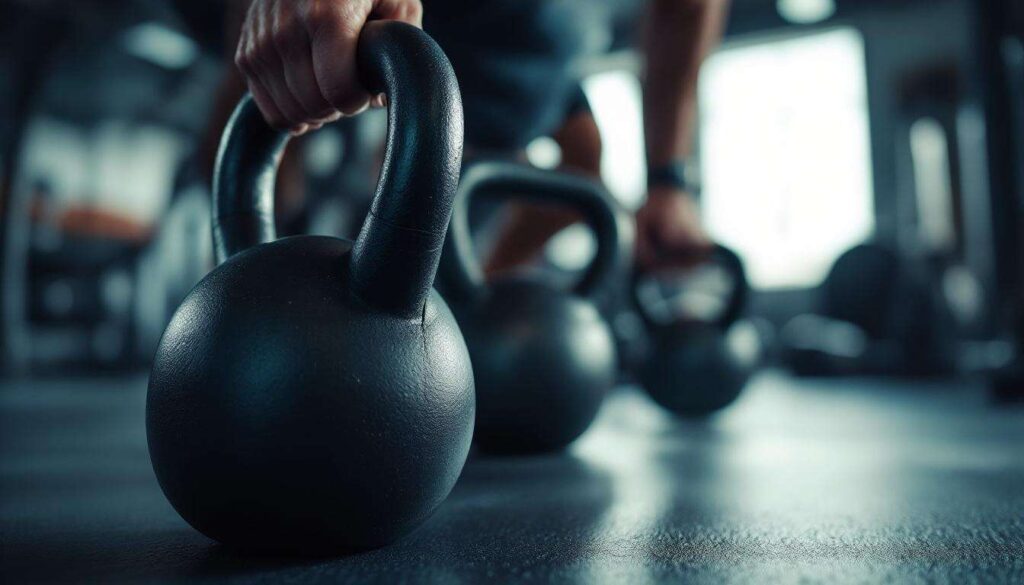
Kettlebells have emerged as one of the most effective pieces of equipment for achieving comprehensive fitness goals. These cast-iron weights, distinguished by their unique handle design, offer a dynamic approach to exercise that combines cardiovascular conditioning with strength training. Unlike traditional dumbbells, kettlebells encourage fluid, multi-planar movements that engage multiple muscle groups simultaneously, making them invaluable for anyone seeking sustainable fitness results. Leading trainers, including those at Peloton, consistently advocate for incorporating kettlebells into workout regimens due to their remarkable versatility and proven effectiveness in building functional strength.
Introduction to kettlebells: a versatile tool for fitness
The unique design and functionality of kettlebells
Kettlebells feature a distinctive construction that sets them apart from conventional weights. The spherical weight with an attached handle allows for a wider range of motion than traditional equipment, enabling exercises that combine strength, flexibility, and cardiovascular training. This design facilitates ballistic movements such as swings and snatches, which generate momentum and require full-body coordination.
The offset centre of gravity challenges stabilising muscles throughout each movement, creating a more comprehensive workout experience. This characteristic makes kettlebells particularly effective for developing:
- Core stability and rotational strength
- Grip strength and forearm endurance
- Coordination between upper and lower body
- Functional movement patterns applicable to daily activities
Why kettlebells suit various fitness levels
One of the most appealing aspects of kettlebell training is its scalability across fitness levels. Beginners can start with basic movements and lighter weights, whilst advanced athletes can progress to complex combinations and heavier loads. The same piece of equipment serves multiple purposes, from rehabilitation exercises to high-intensity athletic conditioning.
Understanding how kettlebells deliver such comprehensive benefits naturally leads to examining the specific health advantages they provide over extended periods of regular use.
The health benefits of kettlebells for long-term wellness
Cardiovascular and metabolic improvements
Regular kettlebell training delivers significant cardiovascular benefits comparable to traditional aerobic exercise. Research has demonstrated that kettlebell workouts elevate heart rate substantially, improving cardiovascular endurance whilst simultaneously building muscle. A typical kettlebell session can burn between 400 and 600 calories per hour, depending on intensity and body composition.
| Benefit Category | Impact Level | Time to Notice Results |
|---|---|---|
| Cardiovascular endurance | High | 4-6 weeks |
| Metabolic rate increase | Moderate to High | 6-8 weeks |
| Muscular strength | High | 3-4 weeks |
| Joint mobility | Moderate | 2-3 weeks |
Injury prevention and postural benefits
Kettlebell exercises promote balanced muscle development that helps prevent common injuries associated with sedentary lifestyles or repetitive movements. The compound nature of kettlebell movements strengthens the posterior chain—the muscles along the back of the body—which is crucial for maintaining proper posture and preventing lower back pain.
The dynamic stabilisation required during kettlebell exercises also enhances proprioception, the body’s awareness of its position in space. This improved neuromuscular coordination translates to better balance and reduced fall risk, particularly important as individuals age.
With these substantial health benefits established, the question becomes how to select the appropriate kettlebell to maximise these advantages.
Choosing the right kettlebell: tips from Peloton
Weight selection guidelines
Peloton’s leading trainers emphasise that selecting the proper weight is fundamental to safe and effective kettlebell training. The ideal starting weight varies based on fitness level, previous strength training experience, and the specific exercises planned. General recommendations include:
- Women beginners: 8-12 kg for foundational movements
- Men beginners: 12-16 kg for basic exercises
- Intermediate users: 16-20 kg for women, 20-24 kg for men
- Advanced practitioners: multiple kettlebells ranging from 20-32 kg
Trainers advise starting conservatively, as proper form matters far more than lifting heavy weights. A lighter kettlebell allows practitioners to master technique before progressing to more challenging loads.
Material and construction considerations
Quality kettlebells feature smooth handles without seams or rough spots that could cause blisters during high-repetition workouts. Cast iron remains the most popular material due to its durability and consistent weight distribution. Some kettlebells feature vinyl or rubber coatings, which protect flooring and reduce noise but may affect grip during sweaty workouts.
Competition-style kettlebells maintain uniform dimensions regardless of weight, whilst traditional kettlebells increase in size as weight increases. This distinction affects handling and may influence which style suits individual preferences.
Once equipped with the appropriate kettlebell, understanding how it specifically enhances strength and mobility becomes essential.
The impact of kettlebells on strength and mobility
Building functional strength patterns
Kettlebell training develops functional strength that transfers directly to everyday activities. Unlike isolation exercises that target single muscles, kettlebell movements require coordinated effort from multiple muscle groups, mimicking real-world physical demands. The swing, for instance, engages the glutes, hamstrings, core, and shoulders in a powerful hip-hinge pattern used when lifting objects from the ground.
This integrated approach to strength development creates resilient, adaptable muscles capable of handling varied physical challenges. The rotational movements possible with kettlebells also address often-neglected transverse plane strength, crucial for athletic performance and injury prevention.
Enhancing range of motion and flexibility
Regular kettlebell practice improves active flexibility—the ability to move joints through their full range whilst maintaining control. Exercises like the Turkish get-up require shoulder mobility, hip flexibility, and thoracic rotation, systematically addressing common areas of restriction. This dynamic stretching under load proves more effective than passive stretching alone for developing usable mobility.
Having established how kettlebells build strength and mobility, the practical matter of integrating them into daily life requires attention.
Incorporating kettlebells into your daily routine
Time-efficient workout structures
One of kettlebells’ greatest advantages is their efficiency. A comprehensive workout requires as little as 20 minutes, making them ideal for busy schedules. Simple protocols include:
- Morning energiser: 10 minutes of swings and goblet squats
- Lunch break session: 15-minute circuit of presses, rows, and lunges
- Evening wind-down: 20 minutes combining strength and mobility work
These brief sessions, performed consistently, deliver superior results compared to sporadic longer workouts. The metabolic demand of kettlebell training means benefits continue well after the session ends.
Creating progressive training plans
Sustainable progress requires systematic progression rather than random workouts. Begin with foundational movements—swings, goblet squats, and overhead presses—mastering form before advancing. Gradually increase volume by adding repetitions or sets, then progress to more complex movements like snatches or clean-and-jerks.
Peloton trainers recommend following structured programmes that balance intensity with recovery, typically training three to four times weekly with kettlebells whilst incorporating other activities on alternate days.
Even with proper planning, certain common errors can undermine progress and increase injury risk.
Tips for avoiding common mistakes with kettlebells
Technical errors and corrections
The most frequent mistake involves improper swing mechanics, particularly using arm strength rather than hip drive to move the kettlebell. The swing should originate from an explosive hip extension, with arms serving merely as connectors. Another common error is rounding the spine during movements, which places excessive stress on intervertebral discs.
Maintaining a neutral spine position throughout exercises protects the back whilst ensuring proper muscle engagement. Working with qualified instructors or following detailed video instruction helps establish correct patterns from the outset.
Programming and recovery mistakes
Enthusiasm often leads practitioners to train too frequently without adequate recovery. Kettlebell workouts are systemically demanding, requiring 48 hours between intense sessions for the same movement patterns. Overtraining manifests as persistent fatigue, decreased performance, and increased injury susceptibility.
Balancing kettlebell training with complementary activities—yoga, walking, or swimming—creates a well-rounded fitness approach that supports long-term adherence and results.
Kettlebells represent a remarkably efficient tool for developing comprehensive fitness that endures throughout life. Their unique design facilitates movements that simultaneously build strength, improve cardiovascular health, and enhance mobility. By selecting appropriate weights, mastering fundamental techniques, and incorporating them consistently into weekly routines, individuals at any fitness level can harness their benefits. The guidance from experienced trainers at organisations like Peloton provides valuable frameworks for maximising results whilst avoiding common pitfalls. With proper application, kettlebells deliver sustainable improvements in functional capacity, making everyday activities easier and supporting active lifestyles well into advanced years.