
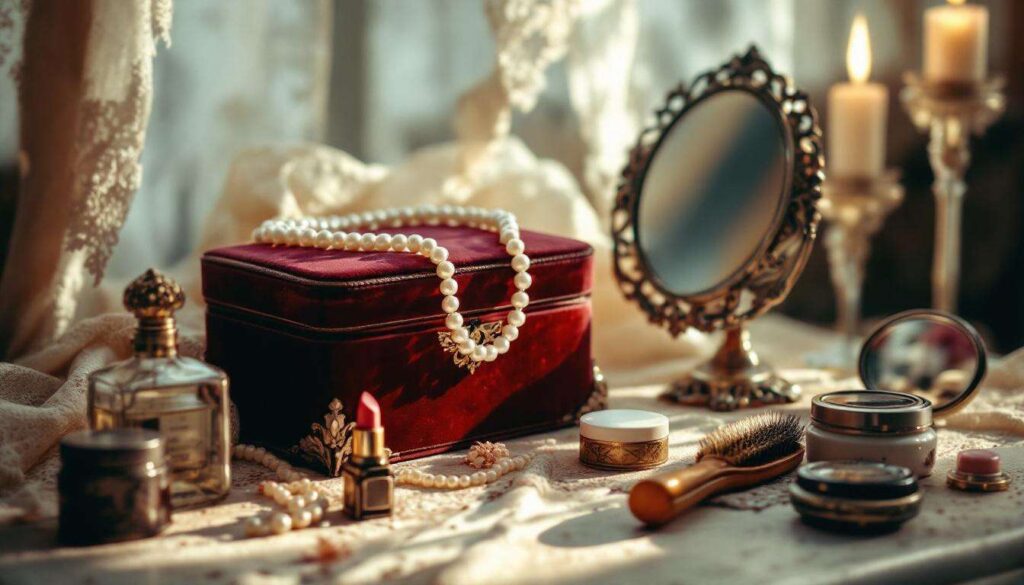
The beauty industry constantly churns out new products promising revolutionary results, yet some of the most effective formulations have been sitting on dressing tables for decades. These time-tested classics have survived countless trends and technological advances, proving that innovation doesn’t always mean improvement. From cold creams that graced Hollywood starlets’ vanities to lipstick shades worn by style icons, certain beauty staples have earned their permanent place in modern routines through sheer efficacy and reliability.
The vintage makeup revival
Iconic lipstick formulations from the golden age
Classic lipstick brands like Revlon’s Fire and Ice and Max Factor’s Ruby Red continue to captivate makeup enthusiasts with their rich pigmentation and creamy textures. These formulations, developed in the 1940s and 1950s, utilised simple yet effective ingredient combinations that modern chemists still struggle to improve upon. The staying power and colour payoff of these vintage shades remain unmatched by many contemporary alternatives.
- Besame Cosmetics’ historically accurate recreations of 1920s-1940s lipsticks
- Guerlain Rouge G lipstick cases, maintaining their Art Deco design since 1928
- Chanel Rouge Allure shades inspired by Coco Chanel’s original colour palette
- Revlon’s Super Lustrous line, virtually unchanged since 1953
Powder compacts that defined an era
Pressed powder compacts revolutionised makeup application when they first appeared, offering portability and convenience that loose powders couldn’t match. Brands like Coty and Bourjois perfected their formulations decades ago, creating finely milled powders that set makeup without caking or appearing chalky. The translucent finishing powders developed in the 1960s remain bestsellers precisely because their simple talc-based formulas work beautifully across all skin tones.
These foundational makeup products naturally lead to the skincare routines that prepared complexions for flawless application.
The essential skincare of yesteryear
Cold cream: the original makeup remover
Cold cream, formulated in the second century by Greek physician Galen, represents one of beauty’s most enduring innovations. Pond’s Cold Cream, introduced in 1846, still uses essentially the same mineral oil and beeswax base that makes it extraordinarily effective at dissolving makeup whilst moisturising skin. Actresses from the Golden Age of Hollywood swore by this simple emulsion, and dermatologists continue recommending it for sensitive skin types.
Witch hazel as a multi-purpose toner
This botanical extract has served as a natural astringent and anti-inflammatory treatment for generations. Thayers Witch Hazel, produced since 1847, maintains its original alcohol-free formula that balances skin pH without stripping natural oils. Modern research has validated what our grandmothers instinctively knew: witch hazel’s tannins effectively reduce inflammation and tighten pores.
| Classic Skincare Product | Year Introduced | Primary Benefit |
|---|---|---|
| Nivea Creme | 1911 | Deep hydration for face and body |
| Eucerin Original Healing Cream | 1900 | Barrier repair and moisture retention |
| Aquaphor Healing Ointment | 1925 | Skin protection and wound healing |
| Kiehl’s Ultra Facial Cream | 1851 | Lightweight all-day moisture |
Glycerin soap for gentle cleansing
Transparent glycerin soaps, perfected by Pears in 1807, offer gentle cleansing without harsh detergents that strip skin of its protective barrier. The glycerin content naturally attracts moisture to the skin whilst the mild surfactants remove dirt and oil. This balanced approach to cleansing has never been bettered, which explains why these soaps remain pharmacy staples.
Just as skincare prepares the canvas, fragrance adds the finishing touch that completes one’s personal presentation.
Timeless fragrances that transcend eras
Chanel No. 5 and the aldehyde revolution
Created in 1921, Chanel No. 5 introduced synthetic aldehydes to perfumery, creating a scent profile that smelled unlike anything found in nature. This abstract floral composition has remained virtually unchanged for over a century, selling a bottle every thirty seconds worldwide. Its longevity proves that truly innovative formulations don’t require constant reformulation.
Single-note classics that endure
Simple, straightforward fragrances like 4711 Original Eau de Cologne (1792) and Yardley English Lavender (1873) demonstrate that complexity isn’t necessary for memorability. These uncomplicated scents layer beautifully with modern fragrances or stand alone as fresh, clean signatures.
- Shalimar by Guerlain (1925): the original oriental vanilla fragrance
- L’Air du Temps by Nina Ricci (1948): romantic spicy floral
- Miss Dior (1947): green chypre elegance
- Mitsouko by Guerlain (1919): sophisticated peach and oakmoss blend
The same attention to detail that characterised classic fragrance development also influenced how women styled their hair.
Retro hairstyling secrets still in vogue
Setting lotions and pin curls
Before heat styling dominated, women achieved lasting curls through setting lotions and pin curls, techniques that protected hair from damage whilst creating beautiful waves. Products like Lottabody Setting Lotion, formulated in the 1960s, still outperform many modern styling products for hold and longevity. The mechanical shaping method of pin curls creates volume and movement without the brittleness caused by excessive heat.
Brilliantine and pomades for shine
Hair pomades, particularly those containing natural ingredients like beeswax and lanolin, have experienced remarkable resurgence. Brylcreem, introduced in 1928, and Murray’s Superior Hair Dressing Pomade (1925) deliver incomparable shine and hold for slicked-back styles and vintage waves. Modern water-based pomades may wash out more easily, but traditional oil-based formulas provide superior control and lustre.
Velvet-covered rollers and their modern descendants
Large velvet rollers created the voluminous sets that defined 1960s glamour, and they’ve never truly disappeared from professional stylists’ kits. These simple tools produce smooth, bouncy curls without creasing or damaging hair. Contemporary variations like velcro rollers follow the same principle: shape hair whilst damp, allow to set, and remove for lasting volume.
Beyond specific products and techniques, certain fundamental approaches to beauty have proven their worth across generations.
Traditional beauty tips for a natural glow
Rose water as a complexion refresher
Rose water has graced beauty routines since ancient Persia, valued for its anti-inflammatory and pH-balancing properties. A quick spritz hydrates skin, sets makeup, and provides a subtle, natural fragrance. Heritage brands like Cortas and Dabur maintain traditional distillation methods that preserve the beneficial compounds modern extraction sometimes destroys.
Petroleum jelly for multiple beauty uses
Since its introduction in 1859, Vaseline petroleum jelly has served countless beauty purposes: lip balm, cuticle treatment, makeup remover, and highlighter base. Its occlusive properties lock in moisture more effectively than many expensive alternatives, whilst its inert nature makes it suitable for even the most sensitive skin.
- Highlighting cheekbones before powder application
- Taming eyebrows and separating lashes
- Creating a glossy lip look
- Protecting skin during hair colouring
- Removing waterproof mascara
Castor oil for lash and brow growth
Long before lash serums commanded premium prices, women applied castor oil to encourage thicker, longer lashes and fuller brows. Rich in ricinoleic acid, this traditional treatment nourishes hair follicles and conditions existing hairs. Whilst results develop slowly, the method costs pennies compared to modern alternatives containing similar active ingredients.
The tools and accessories used to apply these products have their own storied histories worth examining.
Classic accessories and their contemporary impact
Boar bristle brushes for hair health
Natural boar bristle brushes distribute scalp oils along the hair shaft, creating natural shine and conditioning that silicone serums merely imitate. Brands like Mason Pearson, handcrafting brushes since 1885, produce tools that last decades whilst promoting healthier hair through gentle stimulation and even oil distribution. The investment in a quality brush pays dividends in reduced need for styling products.
Tortoiseshell combs and their versatility
Genuine tortoiseshell combs are now illegal due to conservation concerns, but cellulose acetate reproductions maintain the smooth, anti-static properties that made the originals superior. These wide-toothed combs glide through wet hair without snagging or breaking strands, making them gentler than modern plastic alternatives.
Powder puffs and velour applicators
Whilst beauty sponges and brushes dominate current makeup application, traditional velour powder puffs remain unmatched for setting powder application. Their soft texture presses powder into skin for a seamless, airbrushed finish that brushes cannot replicate. Vintage compacts often included these applicators because they genuinely performed better than alternatives.
| Classic Tool | Modern Equivalent | Advantage of Original |
|---|---|---|
| Metal eyelash curlers | Heated electric curlers | No battery required, precise control |
| Stainless steel tweezers | LED-lit tweezers | Superior grip, indefinite lifespan |
| Natural sea sponges | Synthetic makeup sponges | Antibacterial properties, better texture |
| Wooden nail files | Glass or metal files | Gentle filing prevents splitting |
These enduring products and methods demonstrate that beauty innovation follows a cyclical rather than linear path. The most effective formulations often emerged decades ago, developed through careful observation and refinement rather than marketing pressure. Whilst technology has its place, these thirteen categories of vintage beauty staples prove that sometimes the old ways truly are the best ways. Their continued popularity amongst discerning consumers reflects not nostalgia but recognition of genuine quality and efficacy that transcends temporary trends.