

Staying active remains a cornerstone of good health, yet circumstances such as inclement weather, limited outdoor space, or lack of access to gym equipment can make traditional walking routines difficult to maintain. Physical therapists confirm that achieving your daily step goals does not require venturing outside or investing in a treadmill. Indoor alternatives offer equally effective ways to keep moving, improve cardiovascular fitness, and maintain overall wellbeing from the comfort of your own home.
Why walking indoors is a good alternative
Indoor walking provides numerous advantages that often go overlooked. The controlled environment eliminates concerns about unpredictable weather conditions, poor air quality, or safety issues that might discourage outdoor activity. For individuals with mobility challenges, health conditions, or those recovering from injury, the home setting offers greater comfort and accessibility.
Health benefits remain consistent
Research demonstrates that indoor walking delivers comparable cardiovascular benefits to outdoor exercise. The key factor is maintaining consistent movement rather than the specific location. Indoor walking allows you to:
- Control your pace and intensity precisely
- Avoid weather-related interruptions to your routine
- Exercise at any time without concerns about daylight hours
- Reduce joint impact on softer indoor surfaces
Convenience and consistency
The accessibility of indoor walking significantly improves adherence to regular exercise routines. Without the need to travel to specific locations or wait for suitable conditions, you can integrate movement seamlessly into your daily schedule. This convenience factor proves particularly valuable during winter months or for those with demanding work schedules.
| Factor | Indoor walking | Outdoor walking |
|---|---|---|
| Weather dependency | None | High |
| Time flexibility | 24/7 | Limited by daylight |
| Safety concerns | Minimal | Variable |
Beyond simple walking, several dynamic alternatives can help you accumulate steps whilst adding variety to your fitness routine.
Marching on the spot at home
Marching in place represents one of the simplest yet most effective methods to increase daily step counts without leaving your living room. This low-impact exercise requires no equipment and can be performed in even the smallest spaces.
Proper technique matters
To maximise benefits and prevent injury, focus on correct form. Lift your knees to hip height whilst maintaining an upright posture. Engage your core muscles and swing your arms naturally in opposition to your legs. Start with five-minute intervals and gradually increase duration as your fitness improves.
Adding intensity variations
Transform basic marching into a more challenging workout by incorporating these modifications:
- High knee marches for increased cardiovascular intensity
- Adding arm movements such as overhead reaches or cross-body punches
- Incorporating intervals of faster and slower pacing
- Holding light weights whilst marching to build upper body strength
This versatile exercise can be performed whilst watching television, listening to podcasts, or during telephone conversations, making it exceptionally practical for busy schedules. For those seeking more rhythmic movement, another enjoyable option awaits.
Dancing to increase your daily steps
Dance offers a joyful and engaging approach to accumulating steps whilst providing excellent cardiovascular exercise. The combination of physical activity and music creates a powerful mood-boosting effect that makes the workout feel less like a chore.
Various dance styles suit different preferences
Whether you prefer structured choreography or freestyle movement, dance accommodates all fitness levels and personal tastes. Popular options include:
- Zumba-inspired routines that blend Latin rhythms with aerobic movements
- Line dancing sequences that provide clear patterns to follow
- Freestyle dancing to your favourite music playlist
- Ballet-inspired movements for grace and flexibility
Measurable fitness benefits
Dance workouts typically burn between 200 to 400 calories per hour, depending on intensity and body weight. Beyond step counts, dancing improves coordination, balance, and cognitive function through the mental engagement required to follow rhythms and patterns. The social aspect of online dance classes also combats isolation for those exercising alone at home.
For individuals seeking more structured cardiovascular training, additional home-based options provide excellent alternatives.
Home-based cardio exercises
Cardio exercises performed at home deliver substantial step equivalents whilst targeting different muscle groups and energy systems. These activities elevate heart rate effectively without requiring outdoor space or specialised equipment.
Bodyweight cardio movements
Several exercises replicate or exceed the benefits of walking whilst adding strength-building components:
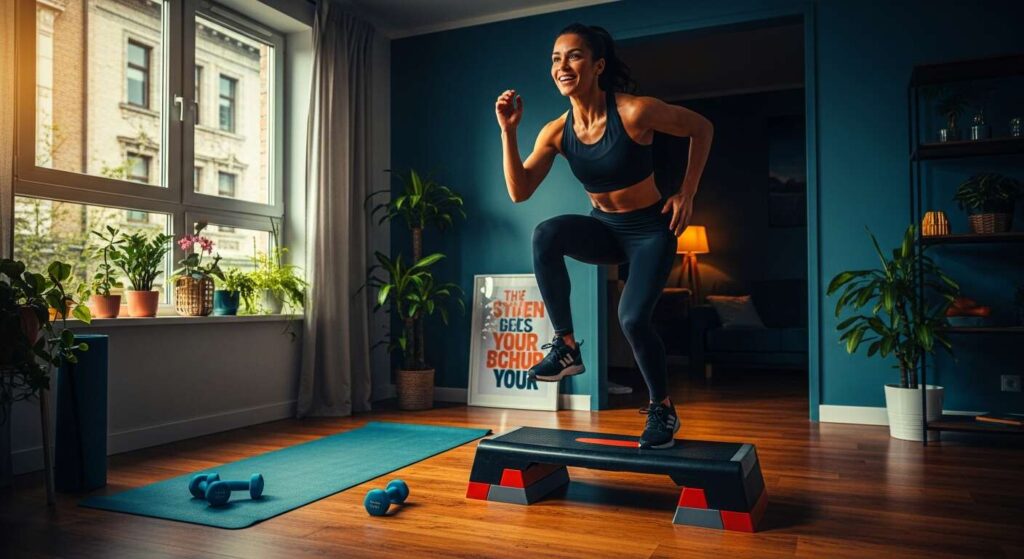
- Step-ups using stairs or a sturdy platform
- Jumping jacks for full-body engagement
- Mountain climbers combining core work with cardio
- Burpees for maximum calorie expenditure
- Skaters for lateral movement and balance
Creating effective circuits
Combine multiple exercises into circuit training for comprehensive workouts. Perform each movement for 30 to 60 seconds, followed by brief rest periods. A typical circuit might include:
| Exercise | Duration | Estimated steps equivalent |
|---|---|---|
| Marching in place | 60 seconds | 100-120 steps |
| Jumping jacks | 30 seconds | 50-60 steps |
| Step-ups | 60 seconds | 80-100 steps |
| High knees | 30 seconds | 60-80 steps |
Technology can further enhance these indoor activities by providing structure, motivation, and tracking capabilities.
Using indoor walking apps and videos
Digital resources have revolutionised home fitness by offering guided workouts, progress tracking, and community support. These tools transform solitary indoor exercise into engaging, structured sessions.
Popular application features
Indoor walking apps typically provide:
- Step counting that works without GPS
- Virtual walking routes with scenic video footage
- Audio-guided workouts with motivational coaching
- Progress tracking and achievement badges
- Social features connecting you with other users
Video workout advantages
Following professional instructors through video platforms ensures proper form whilst adding variety to your routine. Many physical therapists and certified trainers offer free content specifically designed for indoor walking. These videos often incorporate upper body movements, ensuring a full-body workout whilst accumulating steps.
Tracking accuracy
Modern fitness trackers and smartphone accelerometers accurately record indoor steps, though some devices may require calibration for optimal accuracy. Wrist-worn devices generally perform better for indoor activities compared to phone-based tracking, as they detect arm swing patterns associated with walking movements.
Beyond dedicated exercise sessions, numerous opportunities exist to integrate more movement throughout your day.
Adapting your routine for more activity
Small adjustments to daily habits can significantly increase step counts without requiring dedicated workout time. This approach proves particularly effective for individuals with limited schedules or those who find formal exercise sessions challenging.
Household activities as exercise
Regular domestic tasks provide excellent opportunities for movement:
- Vacuum all floors thoroughly rather than spot-cleaning
- Take multiple trips up and down stairs instead of consolidating items
- Walk around whilst talking on the telephone
- Pace during television commercial breaks
- Perform cleaning tasks more vigorously
Creating movement reminders
Set hourly alarms prompting brief walking breaks. Even two to three minutes of movement each hour accumulates substantially over the course of a day. Position frequently used items further away to necessitate additional steps, or establish rules such as walking to another room before checking your phone.
Family involvement
Engage household members in active games, dance parties, or walking challenges. Children particularly benefit from structured indoor activity, and shared exercise strengthens family bonds whilst improving everyone’s health. Consider competitions tracking who achieves the most steps, creating friendly motivation.
Achieving fitness goals at home requires neither outdoor access nor expensive equipment. The strategies outlined demonstrate that consistent movement matters more than location. Whether through marching in place, dancing, structured cardio exercises, guided videos, or increased daily activity, numerous pathways exist to reach recommended step targets. Physical therapists emphasise that the best exercise programme is one you maintain consistently, and indoor alternatives offer flexibility and accessibility that support long-term adherence. By implementing these approaches, you can maintain cardiovascular health, strengthen muscles, and enjoy the mental benefits of regular physical activity regardless of external circumstances.