


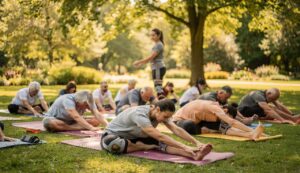

Maintaining muscle strength becomes a critical concern as the body ages. For those over 50, traditional lengthy gym sessions may no longer represent the most efficient path to rebuilding muscle tissue. An innovative approach has emerged that challenges conventional wisdom: a brief, targeted morning routine requiring just eight minutes can deliver remarkable results. This method prioritises consistency, proper form, and functional movements specifically designed to address the physiological changes that accompany ageing. By focusing on bodyweight exercises performed at the start of each day, individuals can activate muscle groups, enhance circulation, and establish sustainable fitness habits that fit seamlessly into busy schedules.
Introduction to the 8-Minute Morning Routine
The 8-minute morning routine represents a strategic approach to muscle rebuilding that emphasises quality over quantity. Unlike traditional weight training programmes that demand significant time commitments and access to specialised equipment, this method harnesses the power of bodyweight exercises performed in a concentrated timeframe.
Core principles of the routine
The foundation of this approach rests on several key principles that make it particularly effective for individuals over 50. Efficiency stands as the primary consideration, recognising that shorter, focused sessions often yield superior results compared to extended workouts that may lead to fatigue or injury risk in older adults.
- Concentrated muscle activation during peak morning hormone levels
- Emphasis on proper form rather than repetition volume
- Sequential exercise selection targeting major muscle groups
- Built-in recovery periods between movements
- Scalable intensity to accommodate varying fitness levels
Structure and exercise selection
The routine typically incorporates four to six fundamental movements performed in succession. Each exercise engages multiple muscle groups simultaneously, maximising the efficiency of the limited timeframe. Common elements include modified squats, wall push-ups, controlled lunges, and core stabilisation exercises.
| Exercise Type | Duration | Primary Benefit |
|---|---|---|
| Lower body movements | 2 minutes | Leg strength and balance |
| Upper body exercises | 2 minutes | Arm and chest conditioning |
| Core stabilisation | 2 minutes | Posture and trunk strength |
| Flexibility movements | 2 minutes | Range of motion preservation |
This structured approach ensures comprehensive muscle engagement whilst remaining achievable for those with limited mobility or fitness experience. Understanding why this timing proves particularly effective requires examining the physiological advantages of morning exercise for mature adults.
Why is the morning routine effective after 50 years ?
The timing of physical activity plays a crucial role in its effectiveness, particularly for individuals experiencing age-related metabolic changes. Morning exercise capitalises on natural hormonal rhythms that peak during early waking hours, creating optimal conditions for muscle activation and recovery.
Hormonal advantages of morning movement
Testosterone and growth hormone levels, both essential for muscle maintenance and development, reach their highest concentrations shortly after waking. By performing resistance exercises during this window, individuals can maximise the anabolic response that supports muscle protein synthesis throughout the day.
- Enhanced cortisol utilisation for energy mobilisation
- Improved insulin sensitivity following overnight fasting
- Elevated metabolic rate sustained for hours post-exercise
- Optimised nutrient partitioning for muscle recovery
Consistency and habit formation
Morning routines benefit from reduced interference with daily obligations. Scheduling exercise before other commitments arise dramatically increases adherence rates, which proves essential for long-term success. Research indicates that individuals who exercise in the morning maintain consistency at rates exceeding 70%, compared to approximately 40% for evening exercisers.
Cognitive and metabolic benefits
Beyond muscle building, morning physical activity delivers immediate cognitive enhancements. Blood flow to the brain increases, neurotransmitter production rises, and mental clarity improves. These effects create a positive feedback loop that reinforces the habit whilst providing functional benefits throughout the day.
| Physiological Factor | Morning Advantage | Impact on Muscle Building |
|---|---|---|
| Hormone levels | Peak testosterone | Enhanced protein synthesis |
| Energy availability | Rested state | Better exercise quality |
| Schedule reliability | Fewer conflicts | Improved consistency |
These physiological advantages combine with practical benefits to create an ideal environment for muscle rebuilding. The specific types of movement incorporated into the routine further amplify these natural advantages.
The benefits of light exercise after 50 years
Light exercise represents a paradigm shift in how fitness professionals approach strength development for mature adults. Rather than pursuing maximal loads that stress joints and connective tissues, this approach emphasises controlled movements that stimulate muscle fibres without excessive mechanical stress.
Reduced injury risk with sustained effectiveness
Heavy weight training carries inherent risks that escalate with age. Tendons lose elasticity, joint cartilage thins, and recovery capacity diminishes. Light bodyweight exercises circumvent these vulnerabilities whilst still providing sufficient stimulus for muscle adaptation.
- Lower impact forces on joint structures
- Reduced inflammation and recovery demands
- Decreased risk of acute injury during exercise
- Gentler stress on cardiovascular system
- Improved movement quality and body awareness
Activation over exhaustion
The primary goal shifts from muscle exhaustion to muscle activation. Brief, controlled contractions trigger the physiological signals necessary for muscle protein synthesis without creating excessive metabolic waste products that prolong recovery. This approach allows for daily training frequency, which accumulates significant volume over time.
Functional strength development
Light exercise naturally emphasises movement patterns that translate directly to daily activities. Squatting, pushing, pulling, and stabilising movements performed with bodyweight resistance improve the specific strength required for maintaining independence and quality of life.
| Exercise Intensity | Recovery Time | Weekly Frequency | Annual Volume |
|---|---|---|---|
| Heavy weights | 48-72 hours | 2-3 sessions | 104-156 sessions |
| Light bodyweight | 12-24 hours | 6-7 sessions | 312-364 sessions |
This comparison reveals how light exercise achieves superior cumulative training volume, creating more frequent muscle-building signals throughout the year. Specific stretching techniques further enhance recovery and prepare the body for optimal muscle development.
Essential stretches for quick muscle recovery
Strategic stretching forms an integral component of effective muscle rebuilding programmes. Dynamic stretches performed before exercise prepare tissues for movement, whilst static stretches applied afterwards facilitate recovery and maintain range of motion.
Pre-exercise dynamic movements
Dynamic stretching involves controlled movements through full ranges of motion, gradually increasing muscle temperature and neural activation. These preparatory movements reduce injury risk whilst enhancing exercise performance during the subsequent strength work.
- Leg swings for hip mobility and hamstring preparation
- Arm circles to activate shoulder girdle muscles
- Torso rotations for spinal mobility
- Ankle circles to prepare lower leg structures
- Gentle neck rolls for upper body readiness
Post-exercise static stretching protocol
Following the strength component, static stretches held for 20-30 seconds help restore muscle length and promote circulation to exercised tissues. This practice reduces muscle soreness and maintains the flexibility necessary for proper movement mechanics.
Recovery enhancement mechanisms
Stretching facilitates recovery through multiple physiological pathways. Increased blood flow delivers oxygen and nutrients to muscle cells whilst removing metabolic waste products. The mechanical tension applied during stretching also triggers cellular signalling pathways that support tissue repair and adaptation.
| Stretch Type | Timing | Duration | Primary Benefit |
|---|---|---|---|
| Dynamic | Pre-exercise | 5-10 movements | Muscle activation |
| Static | Post-exercise | 20-30 seconds | Recovery facilitation |
These stretching practices complement the strength-building exercises, creating a comprehensive approach to muscle development. The specific resistance training methods employed further distinguish this routine from conventional approaches.
The power of bodyweight training after 50 years
Bodyweight training offers unique advantages that become increasingly relevant with advancing age. The self-limiting nature of bodyweight exercises provides an inherent safety mechanism whilst delivering sufficient resistance to stimulate muscle growth and strength gains.
Progressive overload without external weights
Muscle development requires progressive challenge, traditionally achieved by adding weight to exercises. Bodyweight training accomplishes this through manipulation of leverage, tempo, and range of motion. These variables allow continuous progression without the joint stress associated with heavy external loads.
- Adjusting body position to increase mechanical disadvantage
- Slowing movement tempo to extend time under tension
- Increasing range of motion to engage more muscle fibres
- Adding pauses at challenging positions
- Incorporating unilateral variations for balance and coordination
Muscle activation patterns
Bodyweight exercises require integrated muscle activation that mimics natural movement patterns. Unlike isolation exercises performed on machines, these compound movements engage stabiliser muscles alongside prime movers, developing functional strength that transfers to daily activities.
Accessibility and sustainability
The equipment-free nature of bodyweight training eliminates barriers to consistency. No gym membership, no travel time, no waiting for equipment availability. This accessibility dramatically improves long-term adherence, which ultimately determines programme success.
| Training Method | Equipment Required | Setup Time | Accessibility |
|---|---|---|---|
| Weight training | Dumbbells, machines | 10-15 minutes | Gym dependent |
| Bodyweight routine | None | 0 minutes | Anywhere, anytime |
These practical advantages combine with physiological benefits to create an ideal training approach for mature adults. Successfully implementing this routine requires specific strategies that address common obstacles to consistency.
Tips for integrating this routine into your daily life
Knowledge of an effective routine holds little value without successful implementation. Strategic planning and environmental design transform theoretical benefits into tangible results through consistent daily practice.
Establishing the morning trigger
Habit formation research demonstrates that linking new behaviours to existing routines dramatically increases success rates. Identify a consistent morning activity, such as making coffee or brushing teeth, and perform the exercise routine immediately afterwards. This association creates an automatic trigger that reduces reliance on motivation.
- Prepare exercise space the evening before
- Lay out comfortable clothing near the bed
- Set a specific alarm dedicated to exercise time
- Create a visual reminder in the bathroom or kitchen
- Track completion using a simple calendar marking system
Overcoming common obstacles
Anticipated barriers require preemptive solutions. Morning stiffness, time pressure, and low energy levels represent frequent challenges. Address these through gradual wake-up protocols, simplified routines during busy periods, and strategic caffeine timing if appropriate.
Progress monitoring and adjustment
Regular assessment ensures the routine continues providing appropriate challenge. Simple metrics such as repetition count, movement quality, and subjective difficulty ratings offer sufficient feedback without requiring complex tracking systems.
| Week | Focus | Adjustment Strategy |
|---|---|---|
| 1-2 | Habit establishment | Consistency over intensity |
| 3-4 | Form refinement | Movement quality emphasis |
| 5-8 | Progressive challenge | Gradual difficulty increase |
| 9+ | Sustained practice | Periodic variation introduction |
The 8-minute morning routine offers a practical, evidence-based approach to muscle rebuilding for individuals over 50. By capitalising on morning hormonal advantages, emphasising light but consistent exercise, incorporating strategic stretching, and utilising bodyweight training principles, this method delivers results that rival or exceed traditional weight training programmes. Success depends not on perfection but on establishing sustainable daily practice. The accessibility and efficiency of this approach remove common barriers whilst the physiological benefits address age-related muscle loss. Individuals who commit to this brief morning practice can expect noticeable improvements within weeks, with continued gains supporting long-term functional independence and quality of life.